Nemo remembers,
so you don’t have to.
A small device you wear that remembers where you put things and tells you when you ask.
You: “Where are my keys?”
Nemo: “I last saw them on the kitchen table.”
Keeps track of the things that wander off
- Keys
- Glasses
- TV remote
- Pill box
It starts with the keys. It ends with the whole morning.
You were holding them a minute ago. Now you’re checking the counter, the coat, the couch cushions. Again. The car is waiting. So is your day.
It’s a small thing that doesn’t feel small. It costs time and chips at your confidence. Sometimes it means calling someone to help look for something that was right there all along.
You know your home. You run your life. You just need a little backup for the little things.
Finding, found.
Three steps and one button. No menus to learn, nothing to set up each day.
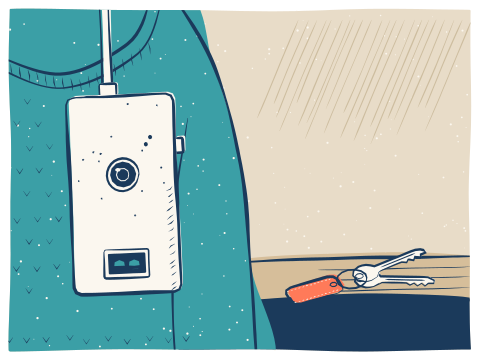
Step 1: Nemo quietly notices
Wear Nemo as you go about your day. Nemo notices where everyday things get put down. Nothing to tag, nothing to set up on each item.
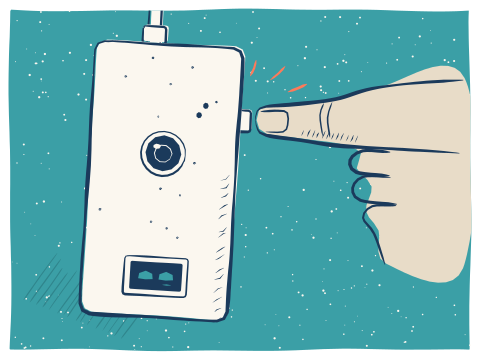
Step 2: You hold the button and ask
Can’t find something? Hold the one button and ask the way you’d ask a friend: “Where are my glasses?”
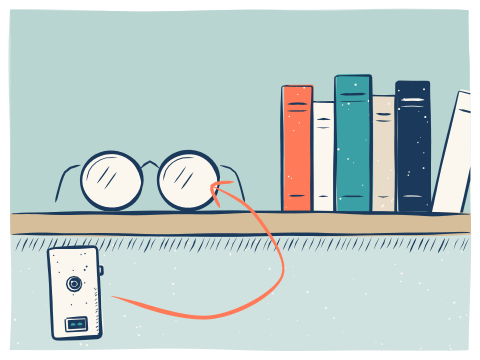
Step 3: Nemo tells you where
Nemo answers out loud with the place and the time: “Your glasses are on the bookshelf in the living room. I saw them there about 20 minutes ago.”
Show it around once. Then just wear it.
The first day, you give Nemo a quick tour of your home. That’s how it can tell you “in the kitchen” instead of just “on a table.”
Step 1: Clip it on
Straight out of the box, clip Nemo to your shirt or hang it from a lanyard.
Step 2: Walk through each room
Go room by room at your own pace, the way you’d show a guest around. Nemo learns what each room looks like as you go.
Step 3: Say the room’s name
In each room, hold the button and say what it is: “Kitchen.” “Living room.” “Bedroom.”
You only do this once. After that, just wear Nemo and ask.
Less searching. More living.
Independence
Your things, your way.
Find what you need on your own, in seconds, without waiting for someone to help you look.
Calm
An answer instead of a scramble.
No more turning the house upside down. One question, one clear reply, and on with your day.
Effortless
Nothing to remember. That’s the point.
Clip it on and carry on. No stickers on your things and no apps to open. Just a button and your voice.
Made for the person wearing it. Loved by the people who care.
If it’s for you
For staying independent
You don’t need anyone hovering. You just need to find your glasses before the kettle boils.
- Find your own things, in seconds
- A friendly reminder when it’s time for your pills
- Works the way you already talk
If it’s for your mom or dad
For peace of mind
You want them to feel capable at home, and you’d like to worry a little less between visits.
- Fewer “have you seen my…?” calls
- A text if something seems off, so you know to check in
- More independence for the people you love
Nemo watches things, not people.
It’s the first question families ask, and it should be. Here’s exactly what Nemo keeps, and what it doesn’t.
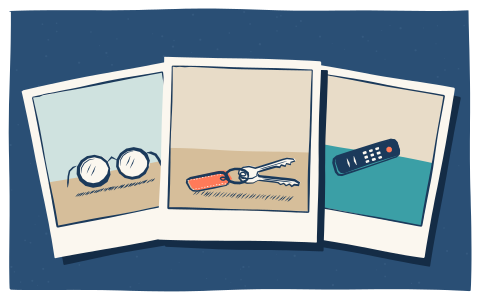
No video kept
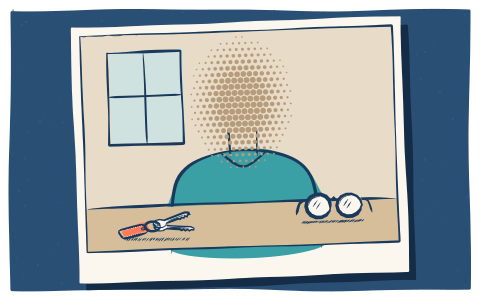
Nemo takes quick looks, not recordings. It keeps only small snapshots of your things.
Faces blurred
Faces are blurred before anything is saved, and Nemo doesn’t recognize people.
Listens only when asked
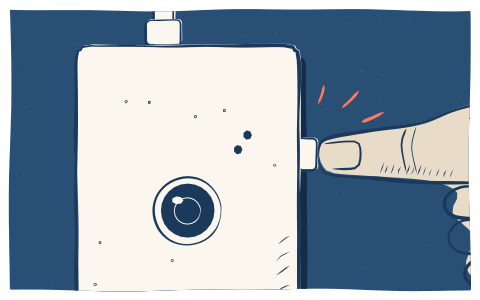
The microphone is on only while you hold the button.
What goes online
A laptop at home does the looking. To remember where things are and to put answers into words, Nemo uses online services. It sends only small snapshots of your things and the words of your question. Never video.
What it’s for
Finding your keys, your glasses, the remote, indoors at home. Its eyes are open whenever it’s on, so you can always tell. Nemo is there to help you with your things.
Small enough to wear all day. Simple enough to forget it’s there.
- Size
- About the size of a deck of cards, and light enough to forget.
- Wear it
- Clipped to your shirt at chest height, or on a lanyard, so it sees what you see.
- Controls
- One button on the side, easy to find by feel. Hold it and talk.
- Answers
- Out loud, in a clear voice, with the place and how long ago.
- Screen
- Just a pair of eyes: open while Nemo is on, closed when it’s off.
- Works
- Indoors at home, over WiFi, with a small hub (for now, a laptop).
- Power
- USB-C, from a small power bank in your pocket.
Where did I put…? Ask Nemo.
You know the moment. Coat on, hand on the door, and suddenly: where are my keys? Your heart jumps a little.
Then a calm voice, right there with you:
“On the kitchen table, twenty minutes ago.”
Panic over. Keys in hand. Out the door.
You asked
“Where are my keys?”
Nemo says
“I last saw your keys on the kitchen table, next to the fruit bowl. That was about twenty minutes ago.”
Four students. One weekend. A lot of lost keys.
We built Nemo at HackUTD 2026 (Zero Day), from a 3D-printed case to a device that answers out loud. We’ve all watched someone we love lose ten minutes to a pair of glasses, and we wanted to give that time back. We’re proud of what we made in a weekend, and we’re just getting started.
Danny Dowling
COO
Josie Burke
CFO
Laura González
CTO
Liam Maher
CEO
You ask. I answer.
Here’s what people ask me most. Something else on your mind? Write to the team.
I’m a small device you clip onto your shirt or wear on a lanyard. I notice where you put everyday things down. When you can’t find something, hold my button and ask. I’ll tell you out loud where I last saw it, and how long ago.
I have a tiny camera that takes quick looks at what’s in front of you as you move around your home. When you set your keys on the table, I make a note of it. Later, when you ask, I tell you the last place I saw them: “On the kitchen table, about ten minutes ago.”
No. While I’m on, I take a quick look about once a second to notice where things land, but I don’t keep video. I keep only small snapshots of your things, and faces are blurred before anything is saved. My microphone is only on while you hold my button.
To remember and answer, some of my work happens online, using only those small snapshots of your things and the words you asked me. I’m looking for your keys, not at you.
No, and you only do it once. When I come out of the box, walk me around your home room by room. In each room, hold my button and say its name, like “kitchen” or “bedroom.” That’s how I learn your rooms. After that, you just wear me.
Right now: keys, glasses, the TV remote and a pill box. We’re working on teaching me more as we go.
Anyone who’s tired of hunting for the same few things, especially people who want to keep doing things their own way at home. Families often find it gives them peace of mind, too.
Yes. I work with a laptop at home that does the heavy lifting for me. I connect to it over WiFi, and it needs an internet connection. Someone sets it up once (you, or a family member), and after that you never need to touch it. You just hold my button and ask.
If you’d like, I can text a family member or caregiver when something seems off: you’ve left the house, the pill box hasn’t moved by its usual time, I think you may have fallen, or nothing has moved for hours. It’s a nudge to check in, not a diagnosis.
I can also remind you out loud, like “You usually take your pills around now. They’re on the desk.”
My name comes from Mnemosyne, the Greek goddess of memory.
Just ask Nemo.
Nemo is a working prototype today. Join the waitlist and we’ll tell you when it’s ready to clip on, for you, or for someone you love.